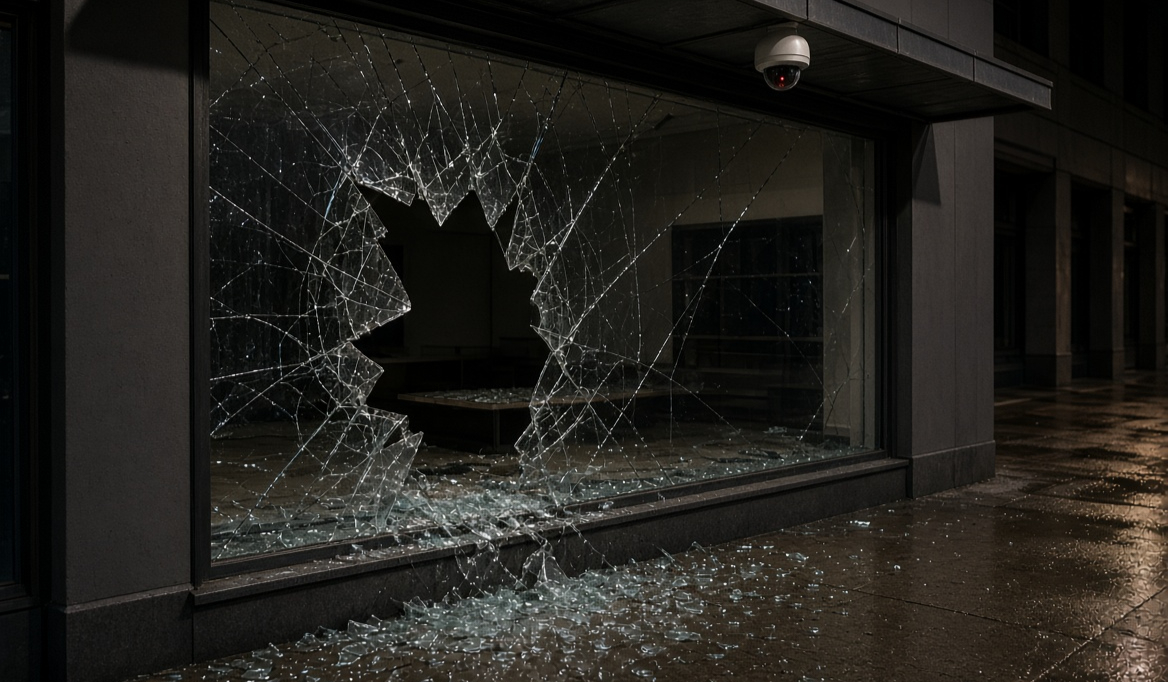

Museum Showcases Must Outlast the Smash-and-Grab
The MAK Vienna jewel theft in broad daylight underscored the operational reality. Public visitors had already crossed the perimeter, placing the final protective layer, the showcase itself, under maximum pressure. Recording the incident on CCTV does not stop the theft. For portable, high-value objects such as historic jewellery, the question becomes whether the security architecture can detect the attack, delay access long enough, and trigger a response before the offender exits the building.
Engineered Barrier Systems Required
"Daylight smash-and-grab thefts expose a fundamental imbalance between detection, delay and response," said Ibrahim Bulut, Senior Security Consultant & Museum Security Expert at Expertise & Security Consultants, in a written response to Security Guys News. "During opening hours, the public has already crossed the museum perimeter, making the showcase and the immediate protective layers around the object critically important. CCTV may record the incident, but recording alone does not stop a theft. For highly portable and valuable jewellery, the key question is whether the security architecture can detect the attack, delay access to the object and trigger an effective response before the offender can escape."
"The objective is not simply stronger glass," Bulut continued. "A high-security showcase must be treated as an engineered barrier system: glazing, frame, locks, joints, anchoring, alarm detection and object restraint must work together. The physical resistance time must exceed the realistic response time. If a showcase can be defeated in seconds but intervention takes minutes, the security concept is structurally inadequate. Shock or tamper detection, immediate alarm verification, trained guarding and rehearsed response procedures must therefore be integrated into the design."
Bulut previously worked at Meyvaert, one of the world's leading specialist museum display-case manufacturers, which gave him hands-on insight into the design, specification and security performance of vitrines protecting high-value cultural objects.
The Human Element in Security Response
The importance of visible, trained security personnel extends beyond museums. Amanda DeAlmeida, Executive Vice President at Building Security Services, told Building Security Services website: "The conversations we're having with retail clients have changed completely in the past two years. It used to be about shrinkage numbers and inventory control. Now it's about employee safety. Store managers tell us their staff are afraid to come to work. When you have a professional security officer present, it changes the entire dynamic, shoplifters see a uniformed officer and most of them walk out before they even try anything."
The principle applies equally to museum environments, where the presence of trained guards capable of rapid response is essential to converting detection into intervention.
Priority Actions for Museums
Museums should start with an object-specific threat and risk assessment based on value, portability and attractiveness, Bulut advised. "Then verify, do not assume, the resistance of the showcase, object anchoring, detection, surveillance, guard deployment, zoning, escape routes and actual intervention times. These measures should be assessed as one layered barrier model: deter, detect, delay and respond. For high-value loans, lenders should make the required protection level a clear contractual condition before the object goes on display."
Bulut's closing observation is unambiguous: "A camera records history; it does not change it. If the barrier fails faster than the organisation can respond, the object is already lost."
---
Photo caption: Museum showcases must function as engineered barrier systems where physical resistance time exceeds realistic response time, experts say.
Cargo Theft Moves From Bolt Cutters to Fake Credentials
Sep 9, 2026
Vienna Smash-and-Grab Leaves $4.3 Million Necklace Gone in Minutes
Sep 8, 2026