

After a $2.6M follow-on, AI weapon screening faces a megavenue stress test
 By Sarah o'Neill · Feb 18, 2026 · 3 min read
In a follow-on contract, Xtract One Technologies said it will expand its SmartGateway deployment at a major international entertainment venue, putting knife-detection accuracy and crowd throughput under a microscope for security teams running high-volume ingress. The trigger matters because this isn’t a demo; it’s a live test at scale where miss risk and nuisance alerts translate directly into liability and crowd control.
What the company says
“Working together for two years now, we’re honored to continue strengthening our partnership with this landmark destination to further showcase the efficacy of our weapons detection technology on a global scale,” said Peter Evans, CEO of Xtract One. “International growth is a core focus for us, and this expansion project – with such a prominent organization – underscores the value of our solutions for key players around the world, provides another strong reference account, and ensures the safety and outstanding experiences for the more than 25 million patrons who visit the venue annually. I believe this is the single largest deployment of any solution globally. As more organizations across the world adopt tech-driven security solutions — particularly those that address the critical need for accurate knife detection — we look forward to further expanding our international customer base and showcasing SmartGateway as a viable solution for all venue security needs.”
Xtract One builds AI-enabled weapons detection gateways for high-traffic environments such as stadiums, hospitals and schools, which makes the firm central to whether knife detection can stay reliable at speed without choking lines.
The operational tradeoff
Security professionals don’t buy revenue headlines, they buy performance under stress. Higher sensitivity improves knife capture rates but drives alerts that spill into secondary screening. Lower sensitivity keeps lines flowing but raises miss risk for small or partially metallic threats. At a site moving tens of thousands per hour, a modest alert rate multiplied by peak ingress can swamp secondary lanes and radios. One high-profile miss, on the other hand, invites investigations and insurer scrutiny.
Knife detection is the real benchmark
Guns are larger and typically easier to detect with multiple modalities. Knives are the operational test because forms vary, metal content fluctuates, and carry rates are higher. If the system can hold knife sensitivity targets during crush periods without flooding operators, it clears the hardest hurdle. If not, bottlenecks shift downstream to bag checks and ad hoc wands, which is exactly the congestion the front gate was meant to fix.
Integration and staffing decide outcomes
Gateways do not operate in a vacuum. They must plug into radios, VMS, ticketing and incident reporting so adjudications are fast and consistent. Most failures we see reported aren’t sensor physics, they’re people and process: ambiguous post orders on what constitutes a “clear,” not enough trained screeners on peak nights, spare-unit logistics that fail during firmware hiccups, analytics dashboards no one reviews until after an incident. If the contract funds hardware but not staffing, training, red-team drills and spare capacity, field performance will diverge from the press release quickly.
Procurement risk and path dependence
Large expansions create lock-in. Once stanchions, signage, training and incident language are built around one vendor’s alert taxonomy, switching costs rise just when you might need leverage to demand better knife performance or analytics access. That is not an argument against scale. It is a reminder to tie payments to measurable detection baselines, mandate periodic third-party red-teaming, and preserve exit clauses that hinge on detection efficacy, not only uptime.
What to watch next
The scoreboard isn’t the contract value. It’s whether the venue holds knife sensitivity targets at peak ingress while maintaining acceptable wait times, whether alert adjudication stays disciplined under pressure, and whether analytics drive concrete SOP changes within the first quarter. If those outcomes land, AI-assisted screening moves closer to dependable gatecraft. If they don’t, the bottleneck just moved and the risk stayed at the door.

Gunshot Sensors Confirm Blast and Flash at the Edge. Alerts Skip the Human Queue
Sep 22, 2026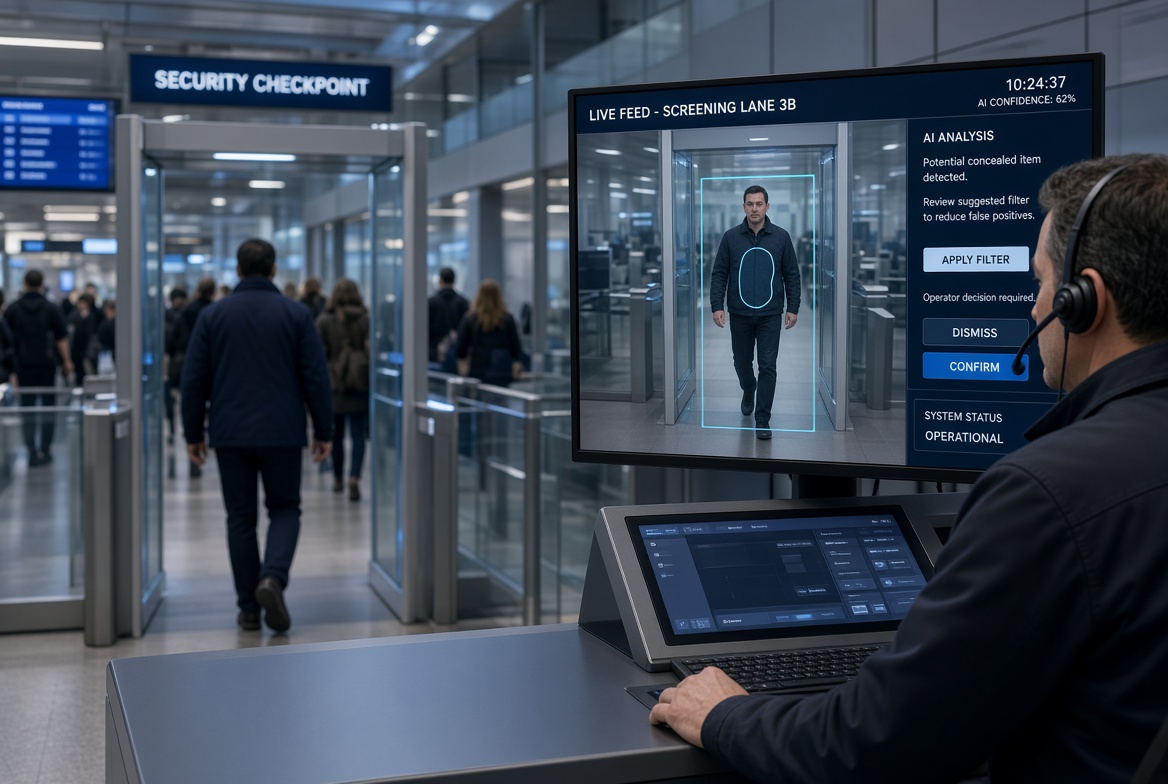
"Screening Narrows the Hits. Humans Still Decide Who Gets Stopped"
Sep 22, 2026