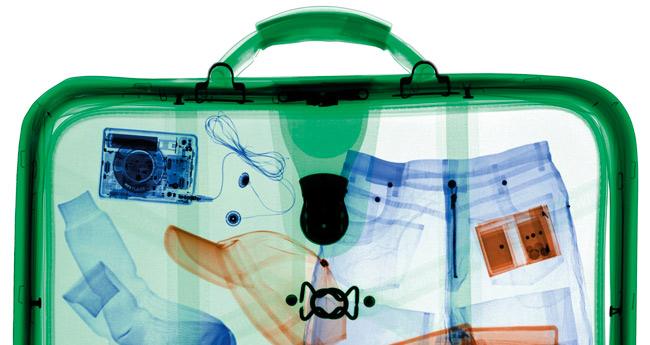

Airport order tied to TSA employee screening rule puts knife detection under real-world pressure
 By Paul Epstein · Feb 18, 2026 · 3 min read
Following a multi-unit order at a U.S. international airport to meet TSA’s employee screening mandate, Liberty Defense’s HEXWAVE is headed into a test that matters to the people who buy and operate weapon detection systems: can it hold knife sensitivity at speed without swamping secondary screening or payroll.
What changed and why now
TSA’s rule requires 100% physical screening of secure-side employees, with U.S. airports expected to deploy appropriate screening technology by April 2026. That deadline is forcing operators to replace ad hoc spot checks with continuous, high-throughput gates that catch both metallic and non-metallic threats while keeping shift changes moving.
The company’s position
“We’re honored to receive this award and to expand our footprint at U.S. airports through the Aviation Worker Screening Program,” said Liberty CEO Bill Frain. “HEXWAVE has demonstrated its effectiveness across airports of all sizes. Its mobility and flexible configurations make it a strong fit for facilities working to meet the airports screening requirements. Ultimately, our mission is to enhance airport security by detecting both metallic and non-metallic threats—something millimeter wave technology does exceptionally well. We believe HEXWAVE is well positioned to become the preferred solution nationwide as airports implement this mandate.”
Bill Frain, CEO, Liberty Defense. The company develops AI-enabled, millimeter-wave screening portals for detecting metallic and non-metallic weapons and explosives, making it directly relevant to airports facing an employee-screening deadline with mixed threat profiles.
Operational tradeoffs you actually own
Raising sensitivity improves knife capture rates, but pushes more alerts into secondary. Dialing sensitivity back preserves flow, but increases miss risk on small or partially metallic blades and components. At employee ingress, where throughput is predictable but peaky, even a low nuisance-alert rate multiplied across badge windows can burn supervisor bandwidth and overtime. The question isn’t “can it detect,” it’s “can it detect at my target sensitivity without breaking my post orders and roster.”
Integrations, not islands
Worker lanes are only as fast as the handoffs: radios for adjudication, VMS for clip review, access-control to lock badges after a fail, incident reporting to log outcomes, and analytics dashboards that teams actually use between shifts. If HEXWAVE (or any gateway) outputs aren’t mapped to those tools with clear timers and responsibilities, you will recreate the very bottlenecks the mandate was meant to remove.
Testing that matters before you scale
Treat the initial deployment as a live acceptance test. Set explicit knife sensitivity targets and false-alert thresholds by shift type. Red-team with common employee carry items that mimic blade signatures. Log adjudication time from alert to resolution, not just “throughput per hour.” Track maintenance touches and firmware stability; a lane that drops during shift change is a staffing problem, not a tech problem, and you will pay for it either way.
Procurement risk and path dependence
Large, multi-unit orders harden your layouts, training and incident language around one vendor’s taxonomy. That’s fine—if you enforce performance clauses that tie payments to knife detection efficacy and adjudication times, not just uptime. Preserve rights to periodic third-party testing and data export so you’re not locked into a dashboard that can’t answer the questions your auditors will ask after an incident.
Why this deployment matters to operators
TSA’s clock compresses decision cycles, but success will be measured at the lane: knife sensitivity maintained at target, alerts adjudicated within defined SLAs, minimal payroll drag at shift changes, and stable integrations that don’t require heroics on crush days. If those conditions hold, you gain a repeatable template for worker screening that satisfies regulators without wrecking operations. If they don’t, the bottleneck will move downstream and the risk will stay at your door.

Gunshot Sensors Confirm Blast and Flash at the Edge. Alerts Skip the Human Queue
Sep 22, 2026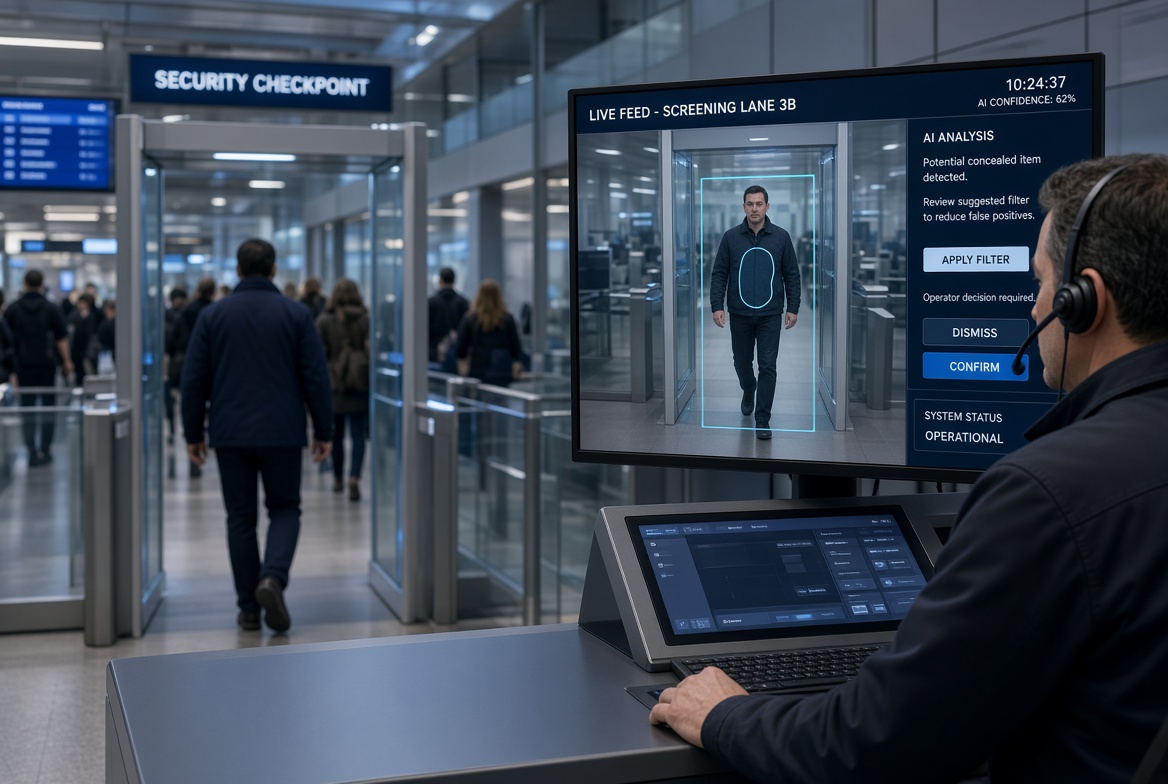
"Screening Narrows the Hits. Humans Still Decide Who Gets Stopped"
Sep 22, 2026