

Airports Have Become a Living Lab for AI Security
 By Paul Epstein · Sep 8, 2026 · 4 min read
During the recent holidays, we traveled to visit my wife’s family in Romania, with a layover at Frankfurt Airport. While a transatlantic flight with a four-year-old can be challenging, for a security professional it was a fascinating journey. The amount of technology embedded in airports over the past few years is striking. Here are a few examples of how AI is being integrated into the most fundamental airport security tasks – watchlist alerting, sterile areas, baggage screening, and background checks. Here’s what I found.
Every airport and airline I contacted for this article declined to provide specific details, or offered a similar response: they take security extremely seriously and operate under strict international standards and regulatory frameworks, but cannot disclose particular measures, technologies, or operational protocols. That reluctance is understandable. Yet the operational reality inside modern terminals tells its own story.
Baggage Screening: Intelligence on Top of Legacy Infrastructure
One of the most visible transformations is happening at screening lanes.
SeeTrue provides an AI layer that integrates with existing X-ray and CT scanners to deliver real-time automated threat detection. Instead of relying solely on human interpretation of complex imaging, the system analyzes each frame, flags suspicious objects, and helps reduce false alarms. Crucially, it allows airports to upgrade detection capability without replacing hardware fleets already deployed.
A complementary model is offered by NeuralGuard, which positions itself as a vendor-agnostic AI overlay compatible with multiple scanner manufacturers.
In a written response, Dotan Chayen, CEO of NeuralGuard, said:“We provide an intelligence layer that connects to existing X-ray and CT systems and improves both accuracy and throughput – without adding operational burden.”
According to Chayen, the system detects up to 95% of prohibited items with sub-second processing times. He added:“In live environments, we’ve seen up to a 3x increase in throughput and up to a 40% reduction in checkpoint wait times.”
Beyond detection metrics, the operational impact is significant. Reducing nuisance alarms lowers operator fatigue. Faster decision cycles shorten queues. AI is not replacing the machines. It is redefining how they are interpreted.
Airports have made headlines following several physical security breaches. At Detroit Metropolitan Airport, an unauthorized individual accessed a restricted terminal area and reached passenger processing zones. At Nashville International Airport, a passenger entered a secure area and attempted to board without a boarding pass. At Munich Airport, a man reportedly boarded flights on multiple occasions without holding a valid ticket.
These cases do not necessarily indicate systemic collapse. They do, however, illustrate the operational difficulty of enforcing continuous access control, identity validation, and perimeter integrity in facilities designed to move tens of thousands of people per hour. In such environments, even minor procedural gaps can be exploited. It is precisely this tension between throughput and control that has accelerated the integration of AI-driven security technologies.
Watchlist Alerting and Sterile Zone Control
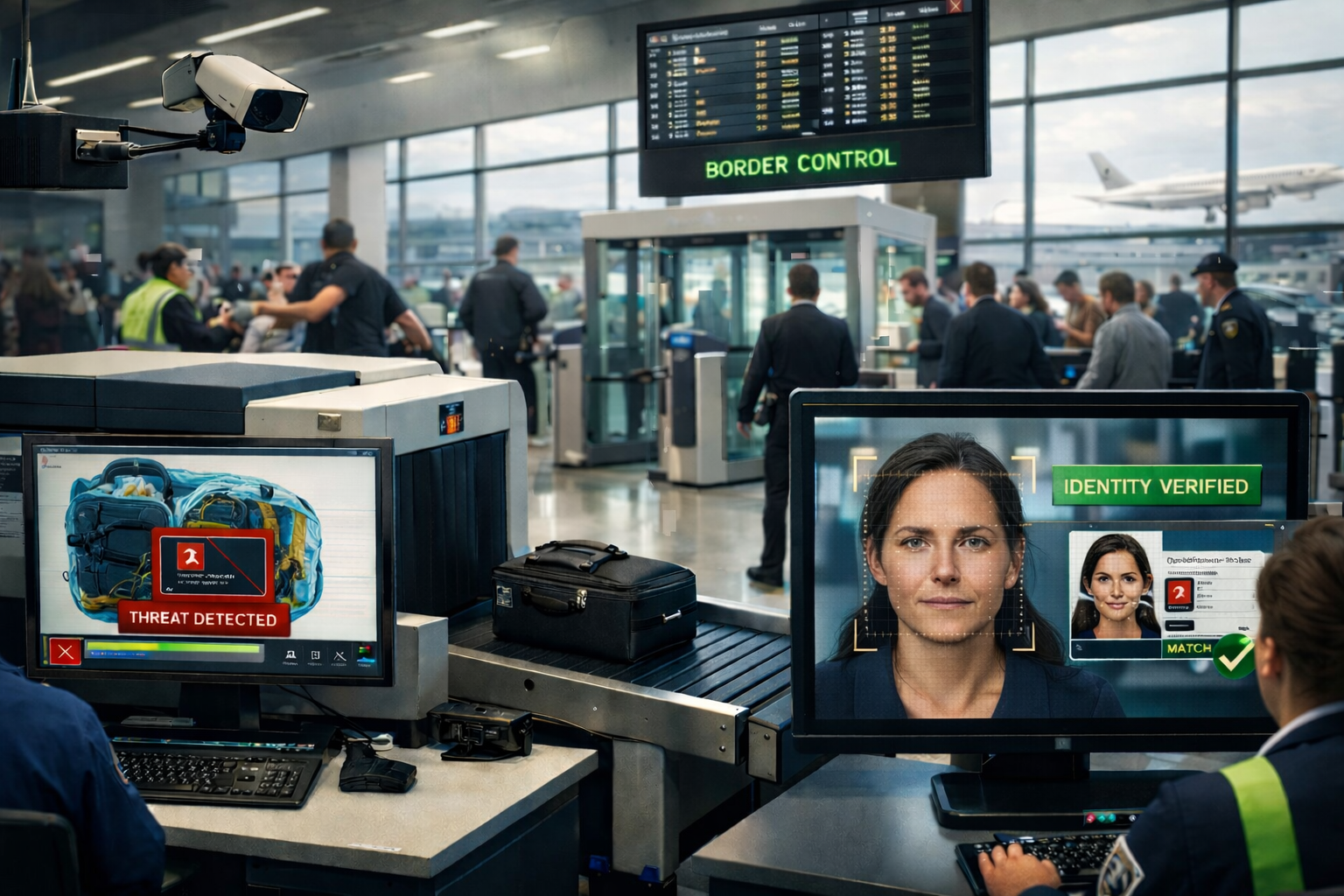
Facial recognition has shifted from limited pilot deployments to operational integration across major hubs. Metropolis, formerly Oosto, operates facial recognition systems in dozens of airports worldwide. These systems support real-time watchlist alerting, employee identity verification, and access control in sterile areas. By running on top of existing camera infrastructure, they provide continuous monitoring without disrupting passenger flow.
Other major vendors reinforce this trend. NEC supplies biometric identification systems widely used in airport identity verification and border control programs. Hikvision integrates facial recognition analytics into large-scale video management systems deployed in transportation hubs globally. Idemia provides biometric identity platforms powering automated border gates and passenger processing solutions across multiple continents.
The strategic shift is clear. Airports are moving from point-based identity checks to persistent, camera-driven identity assurance layered across the entire terminal.
Background Checks and Risk Intelligence
Identity verification is only one layer of control. Risk analytics adds another.
Satya Digital focuses on AI-driven background screening at border checkpoints, aggregating multiple data sources and generating real-time risk alerts for authorities. Instead of relying solely on document inspection and manual questioning, these systems apply algorithmic correlation to refine risk assessment.
A comparable competitor in this domain is Clearview AI, which provides facial matching and investigative analytics tools used by certain law enforcement and border agencies. The regulatory and privacy debates around such technologies continue, but the operational direction is evident: data aggregation and automated cross-referencing are becoming embedded components of border security workflows.
The Structural Shift
Airports are uniquely complex environments. They combine massive passenger volumes, fixed infrastructure, strict regulatory oversight, and constant operational pressure. AI adoption in this sector is not experimental. It is structural.
At screening checkpoints, algorithmic support reduces false positives and increases throughput. In sterile zones, biometric monitoring strengthens access control integrity. At borders, data-driven analytics refine risk evaluation. Each layer supports the others.
Airlines may remain publicly cautious. Operational specifics will stay confidential. But the trajectory is unmistakable.
From conveyor belts to camera grids to passport control booths, AI systems now operate alongside security professionals to improve detection accuracy, optimize flow, and reduce exposure to risk. Airports have become the world’s largest live testbed for AI-driven physical security. And the transformation is no longer theoretical.
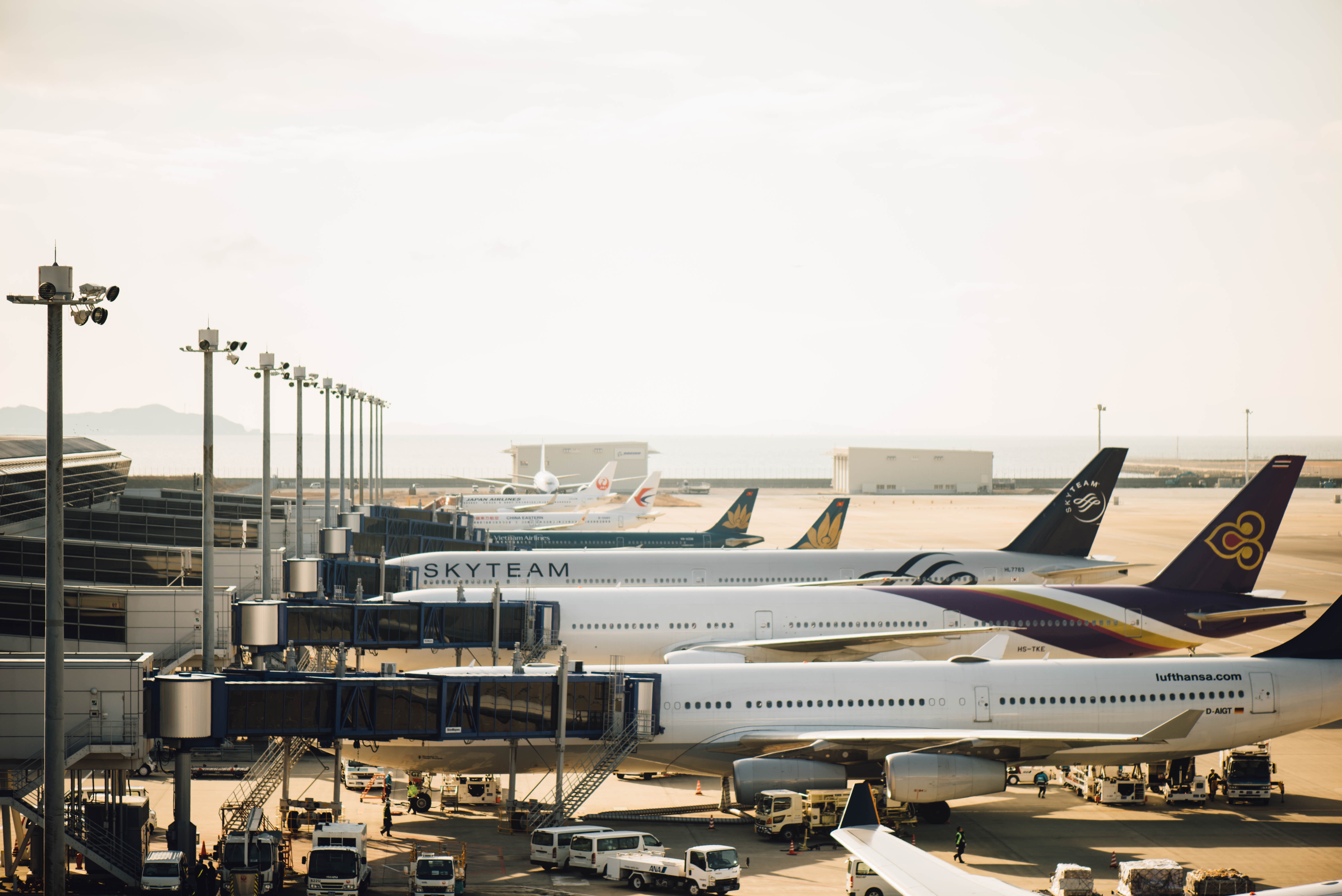
Heathrow and U.S. Hubs Deploy New CT Scanners to Slash Security Lines
Aug 1, 2026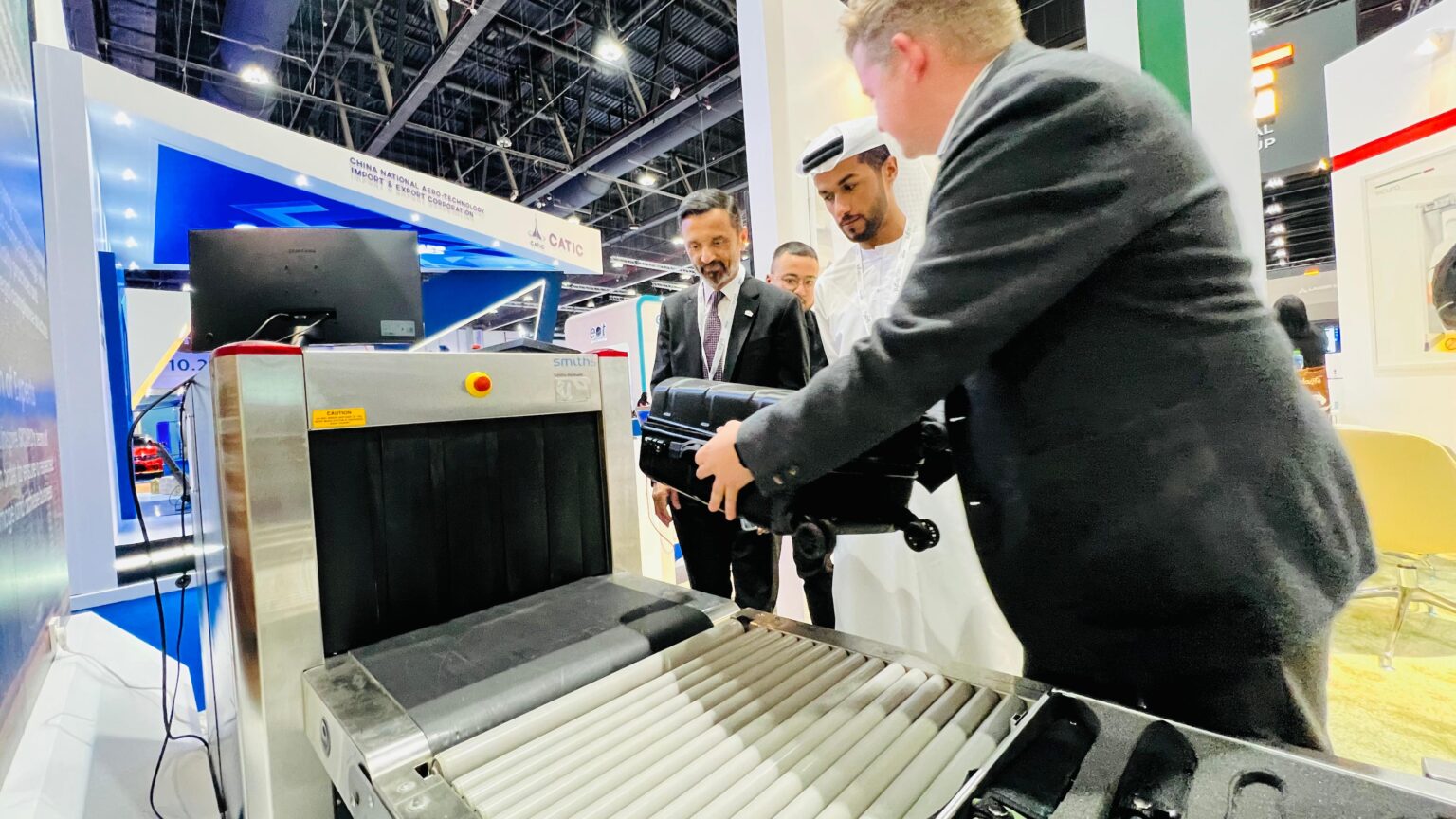
AI X-Ray Screening Gains Urgency After Airport Shooting
Jul 31, 2026