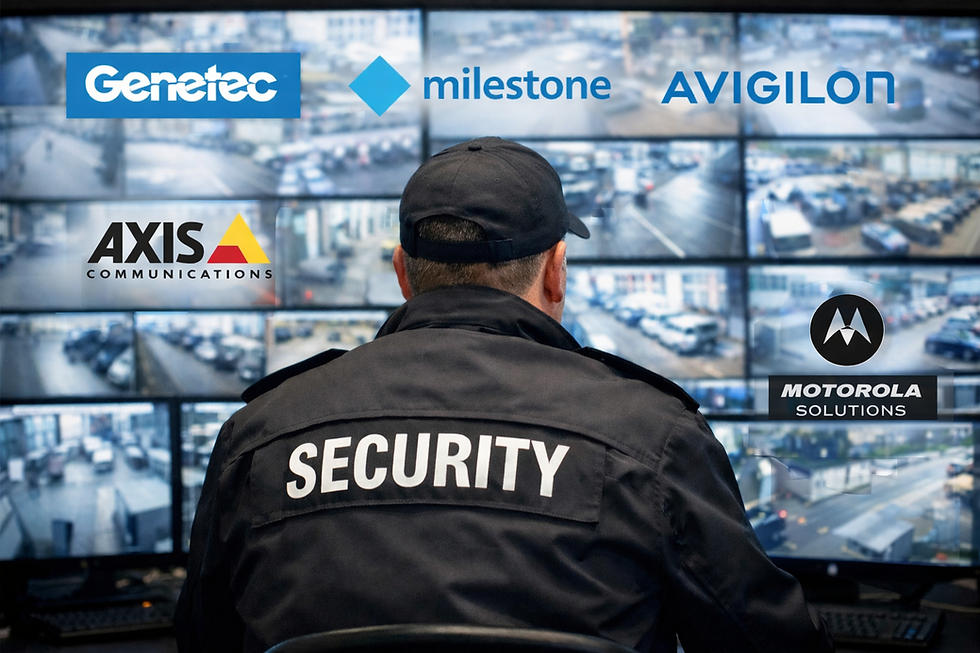
From Cameras to Decisions: AI Video Analytics Is Reshaping Security Operations

For decades, the basic architecture of physical security remained largely unchanged. Cameras recorded footage, operators watched screens and incidents were investigated after the fact. Even in large security operations centers supervising hundreds or thousands of cameras, most systems still relied on motion alerts and manual review to determine whether something meaningful was happening.
Artificial intelligence is beginning to change that model.
Across enterprise security environments, AI-based video analytics platforms are being deployed to interpret scenes in real time, classify objects and behaviors and surface events that may require human attention. The ambition is not merely better surveillance but something closer to operational intelligence - systems capable of helping security teams understand what matters across large camera networks.
The shift reflects a simple operational reality: organizations have deployed far more cameras than human operators can realistically monitor.
False alerts remain one of the most persistent problems. Conventional motion-based systems routinely generate alerts triggered by weather, lighting changes, animals or routine activity. In large monitoring centers, operators can spend the majority of their time investigating events that turn out to be irrelevant.
This has become one of the primary entry points for AI analytics platforms, which use computer vision models to classify humans, vehicles or suspicious behaviors and filter out nuisance alerts before they reach operators.
One example often cited by vendors involves remote monitoring operations where AI is used to verify potential intrusions before escalating incidents. Evolon, a U.S. company focused on proactive video monitoring, has positioned its platform around exactly this problem.
In a published deployment example involving security monitoring firm Titan Protection & Consulting, the company evaluated Evolon’s AI-based video verification platform as part of its command center operations.
Ryan Smith, president of Titan Protection & Consulting, described the results in a statement released during the evaluation process: “I'm thrilled with how our evaluation of Evolon Verify went and am looking forward to moving to the full deployment stage. With Evolon's cutting-edge technology, I know our solutions will be taken to the next level.”

The platform itself is designed to operate as an analytics layer connected to existing cameras. Evolon’s Insites system analyzes live video streams, identifies potential threats and enables operators to search recorded footage using AI-generated metadata rather than manually reviewing long video segments.
This architecture reflects a broader direction within the surveillance industry.
Major manufacturers such as Axis, Milestone and Motorola Solutions are embedding AI capabilities directly into cameras and video management platforms. At the same time, a growing ecosystem of software companies is building analytics layers designed to operate on top of existing infrastructure.
The goal is to transform surveillance systems from passive recording tools into operational intelligence platforms. Modern analytics engines can detect specific objects or behaviors, generate contextual alerts and attach searchable metadata to recorded video. This dramatically reduces the time required to investigate incidents. Instead of manually reviewing hours of footage, security teams can search video archives for terms such as “person near loading dock,” “vehicle entering restricted area,” or “object left behind.”
In large facilities such as logistics hubs, campuses or transportation sites, this capability can fundamentally change the way incidents are investigated.
The market for these technologies has expanded rapidly as a result. AI video analytics vendors now compete across a wide range of use cases, including perimeter detection, retail loss prevention, behavioral analysis and operational monitoring in industrial environments.
Some companies focus on real-time detection and alarm verification, particularly in remote monitoring centers. Others emphasize forensic search capabilities or behavioral analytics designed to identify anomalies across large camera networks.
Because most enterprises already operate complex security stacks that include video management systems, access control platforms and monitoring software, integration has become one of the most important competitive factors. Vendors that can enhance existing infrastructure without forcing customers to replace hardware often have an advantage.
Evolon’s platform is designed to operate within this model, connecting to existing camera environments and applying cloud-based analytics to generate alerts and insights. The company has also promoted the concept of an AI “copilot” that assists operators in monitoring facilities and retrieving relevant video evidence.
These capabilities place Evolon within the broader wave of companies attempting to reposition video surveillance as a decision-support tool rather than a passive recording system.
Because of these claims and the company’s public positioning around proactive monitoring and AI-driven security operations, Evolon was approached for comment as part of this reporting. The company was invited to discuss real-world deployments, integration with existing VMS environments and measurable operational outcomes reported by customers. Evolon’s PR representative chose not to respond to Security Guys News’ questions.
In a sector where vendors frequently promote the transformative potential of AI in security operations, the ability to discuss concrete deployments and operational results has become an increasingly important benchmark. When companies make expansive claims about how their platforms reshape security workflows but decline to address detailed questions about real-world performance, it can raise questions about how closely marketing narratives align with operational evidence.