The Cockpit Door Was Built for the Wrong Threat

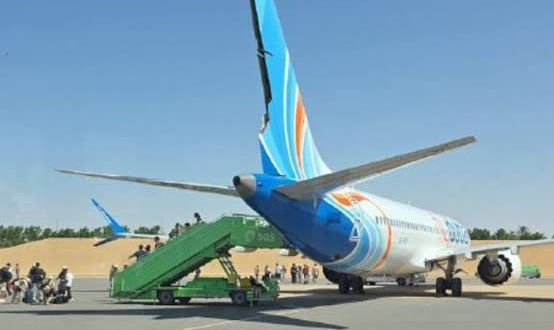
Flydubai flight FZ1073, Dubai to Tel Aviv, transmitted emergency and unlawful-interference codes, made a steep descent and diverted to Tabuk, Saudi Arabia, after a reported fight in the cockpit. An unnamed passenger with no background in security or aviation neutralized the attacker with blows and fought him over the controls before another pilot reached the deck. Passengers also helped subdue him, and a doctor and a nurse on board gave first aid. The aircraft landed. The question left on the ground is why the systems built for this moment did not decide it.
Those systems face the cabin, not the other seat. After 2001, airliners got a reinforced, lockable flight-deck door, a keypad with an emergency access code, and a camera showing the area outside the door. On an Airbus A320 the pilot inside can override the code and hold the door locked for five minutes. Secondary barriers, where fitted, stop a rush from the galley. Transponder codes 7700 and 7500 tell the ground there is an emergency or unlawful interference. None of that sees, or stops, a crew member already on the deck.
The Door Kept the Help Out
Jeff Ketelaars, co-founder of Security Guards Only and a pilot, said in written comments to Security Guys News that this is a people problem and cannot be automated away. He warned against treating FZ1073 as a Tel Aviv-route case or looking for a technical fix for what may be an ideological or personal act. "Whatever investigators conclude about the first officer's motive, the threat is one aviation has faced for decades: a trusted crew member turning on the people beside him." He cited FedEx 705 in 1994, EgyptAir 990 in 1999, Germanwings 9525 in 2015 and Horizon Air 2059 in 2023. On Germanwings, the locked door kept out the one person who could have saved the aircraft. "A locked door, plus trusting the person behind it to do the right thing, has not served us well."
Ketelaars said a flight computer that overrides irregular inputs fails the same test. Pilots must be able to switch automation off, so there is always a way around it, and software that overrules a pilot will act on bad data. He pointed to the 737 MAX MCAS as the case. His practical list was a two-person flight deck, cabin crew and passengers treated as part of the protection, crew screened for weapons to passenger standard, a psychological check inside the pilot medical, and 7500 treated as genuine until verified otherwise. Canada ordered two crew on the deck at all times after Germanwings, then let the order lapse. He said FZ1073 is a reason to revisit that.
Call It Interference Until It Is Not
Lady Olga Maitland, founder of the Defence and Security Forum and The Resilience Imperative, said the fight should be treated as a security incident, not an HR matter. A physical struggle that can affect control should trigger an aviation-security investigation by the regulator, the airline and national security authorities. ICAO already requires states to report acts or attempted acts of unlawful interference, including attempted seizure. She said the threshold should drop: an unexplained cockpit struggle is a potential security threat until investigators show otherwise.
EASA, she noted, has reinstated a two-authorised-person cockpit as its preferred approach, so that when one pilot leaves, another trained crew member enters. She doubted a third qualified pilot would be on board, and said cabin crew need clear authority to enter and operate the door in a suspected incapacitation or security event. Training should cover a pilot who turns aggressive, refuses the controls, or interferes with navigation, with the priority on stabilising the aircraft rather than fighting. "What needs to be looked at was when an authorised crewmember on the flight deck caused deliberate interference with aircraft control." She called for a category of flight-deck internal security event. Whether this was a breakdown or an attempted seizure, she said, changes the threat model, and that is not yet known.
The U.S. Transportation Security Administration said in a written reply to Security Guys News that it is aware of the flydubai incident, is monitoring it, and is coordinating with aviation, law-enforcement and international partners. It gave no operational detail.
The passenger who took the controls did the job the door, the camera and the code were not built to do. Those tools still assume the threat is outside. On this flight the threat was in the next seat, and the intervention that stopped it came from the cabin.