
AI screening filters false alarms, keeps the human call
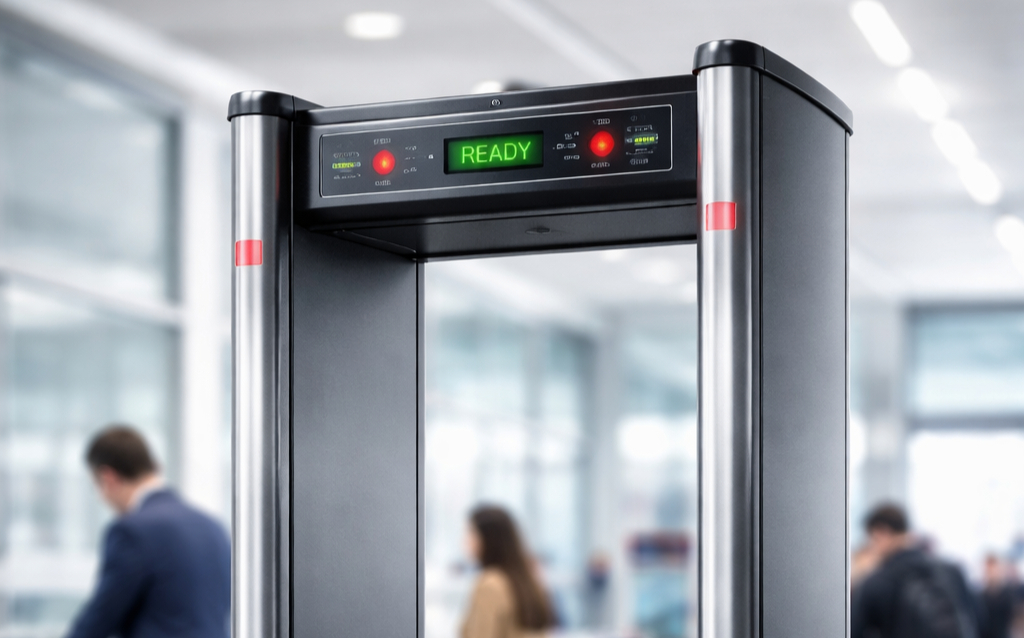
Public venues and logistics facilities face a severe operational bottleneck at security checkpoints. Automated deterrence measures carry immediate costs when triggered incorrectly, while hesitation creates severe security gaps. According to the U.S. Department of Justice's Office of Community Oriented Policing Services, 94 to 98 percent of alarm calls turn out to be false. The scale of that pressure is significant: the Transportation Security Administration screened a record 3.13 million passengers in a single day on November 30, 2025, underscoring the volume high-throughput checkpoints must process without slowing pedestrian flow. This reality drives physical security teams to seek smarter filtering systems that maintain response speed without shutting down pedestrian flow.
Isolating transient anomalies
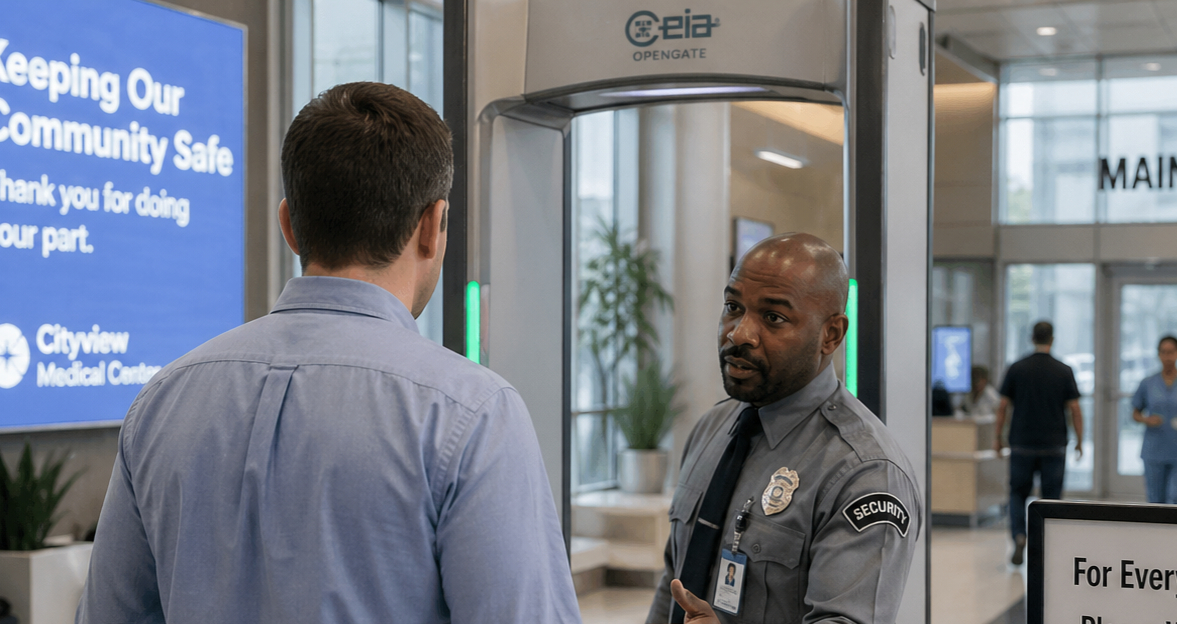
Vendors are addressing this execution gap by shifting AI away from binary threat declaration. The focus is moving toward localized visual assistance. Rather than simply triggering an alarm, modern passive screening technology highlights the size, shape, and location of items concealed beneath clothing. Because these systems process continuous video feeds rather than static images, algorithms analyze frame-to-frame data. This determines if a potential concealment is a persistent anomaly or a transient false positive.
This analytical layer directly impacts how human operators manage pedestrian flow in controlled checkpoints. Mark Fear, Product and Marketing Director at Thruvision - a provider of passive people-screening technology - replied in writing to Security Guys News about this operational shift. The software augments human interpretation rather than replacing it entirely.
"Thruvision's approach is therefore to assist the operator as far as possible in filtering out false positives in order that they can focus on deciding which true positives need to be investigated further, but not to take the decision about whether to investigate and/or escalate away from the operator altogether," Fear said. "It reduces the dependence on the skill and attentiveness of the operator in interpreting images, giving more consistent detection performance across a body of operators. The operator is freed up to focus on managing the flow of people and interacting with screening subjects, potentially enabling one operator to supervise multiple screening lanes."
Defining the automation boundary

The line separating automated data processing from human incident response ultimately comes down to the decision to investigate. Threat detection algorithms can endlessly filter imagery without consequence. Escalating a potential concealment requires human judgment.
By utilizing frame-to-frame interpretation to confidently eliminate false positives upstream, software platforms allow security teams to reserve human attention for exact moments of intervention. Terry Swanson, President and CEO at Singlewire Software, said in written responses to Security Guys News that operators manage this tradeoff by designing solutions that keep a human in the loop. The system relies on automation on either side to increase speed and validate information.
"Everything upstream - the tools detecting a threat - needs to get the right information into a decision-maker's hands as fast as possible," Swanson said. "That means consolidating signals from sensors, cameras, access control, and other systems into a single view, so nobody has to assemble the picture themselves under pressure. Everything downstream - the tools delivering the information to everyone else - is about acting on the decision immediately once it's made: notifying everyone, locking down a building, and coordinating a response. All of that runs on executing pre-configured emergency action plans, workflows, device mapping, and notification paths. The judgment call ends up being the only step that isn't automated."
Execution speed and throughput
Operators cannot afford to assemble a complete situational picture under pressure. Frictionless screening architectures must preserve throughput while maintaining strict safety standards. High-volume venues require systems that balance continuous threat detection with seamless commuter flow.
The strategic application of AI filtering restricts the flow of bad data. Security teams maintain vigilance without compromising operational efficiency during peak travel periods. Orchestrating these upstream detection signals directly into downstream action plans ensures that security personnel only intervene when absolute verification is required.